A direct sale to a home-buying company starts with a conversation about the property and ends with a contract, title work and a closing. Between those points, you need to know who will buy the house, how they will fund the purchase, and what could change the deal.
Some companies renovate and resell, some hold rentals, and some seek to assign their purchase contract to another buyer. Ask which arrangement the company proposes for your house. The steps below help you follow the transaction and make your own decision about the terms.
First, describe the house and the sale you need
Expect questions about the address, condition, occupancy, ownership and your preferred timing. Tell the buyer about known repairs, tenants and any deadline that affects the sale. You do not need to guess at a repair cost or promise vacant possession before checking your obligations.
Ask what the company needs to evaluate the house and whether it wants a walkthrough, photos or reports. Confirm who will visit and how access will work. An initial number based on a short phone call may be preliminary; ask what remains before the buyer can put an offer in writing.
The buyer reviews the property and proposes terms
A buyer may compare nearby sales, inspect the condition, estimate work and consider its planned use of the house. Different buyers can reach different prices because they have different plans and costs. No fixed percentage of after-repair value proves that an offer is fair or that a buyer is legitimate.
For more on pricing, see our cash-offer pricing article. Use the written price, itemized costs and your alternatives to make the decision; an industry rule of thumb does not establish what you will receive.
Request current proof of funds that fits the purchase amount and named buyer. If a lender or funding partner will supply the money, ask what approval remains. Proof of funds is useful evidence, but it does not guarantee that the buyer will close.
Read the agreement before you accept
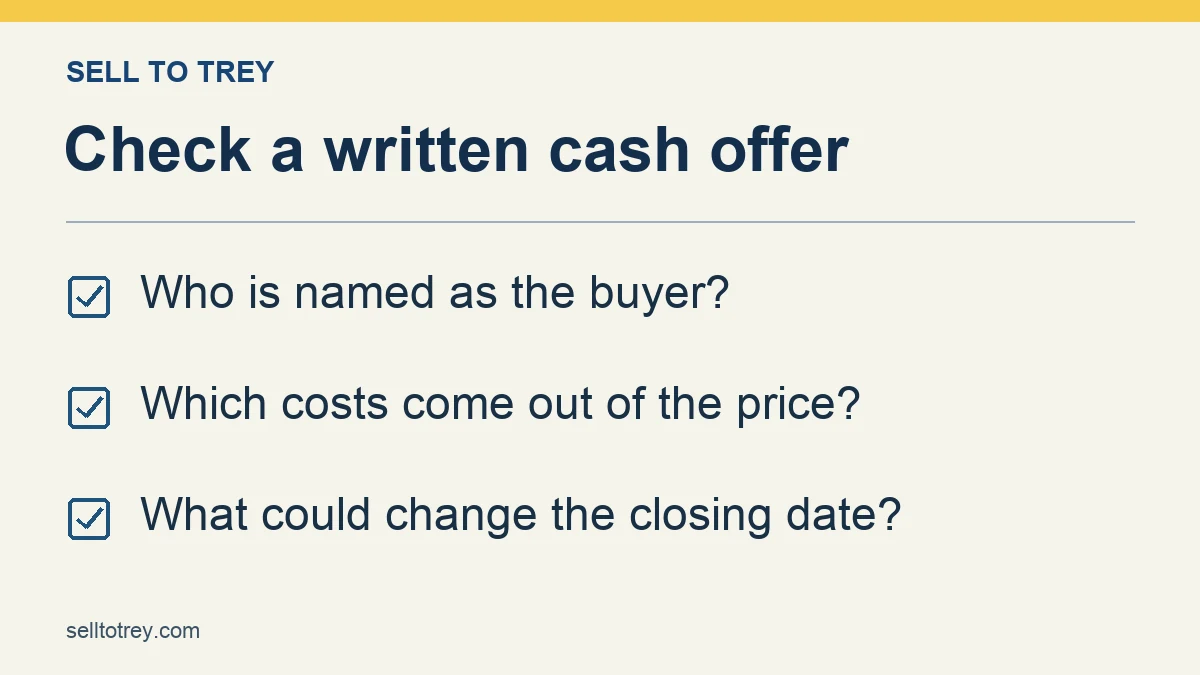
The contract sets the obligations. Ask your own lawyer to explain terms you do not understand before you sign, including:
The exact buyer’s legal name, the signer’s authority, and whether that buyer can assign the contract. If assignment is allowed, ask who must disclose the new buyer and whether the original buyer remains responsible.
The purchase price, deposit, deposit holder, payment deadlines, and circumstances in which either party can recover the deposit or terminate.
Inspection, appraisal, financing, title and other contingencies, including deadlines and any right to request a price change.
Who pays each closing charge, whether any fees or credits reduce your proceeds, and what happens if the closing date changes.
The condition you must deliver, items you may leave, possession date, and any tenant or post-closing occupancy arrangement.
A “cash” label alone does not promise no inspection, no appraisal, no renegotiation or no funding problem. “As-is” also needs contract language explaining repair obligations and the buyer’s inspection or cancellation rights. Check the written terms rather than assuming either label removes those questions.
Earnest money is another contract term. A small deposit alone does not prove fraud, and a large one does not guarantee completion. The NC Real Estate Commission’s earnest-money guidance explains why the agreement and deposit handling matter.
Compare the net proceeds and the conditions
Ask for a seller settlement estimate that starts with the price and lists payoffs, agreed fees, taxes, credits and other deductions. The offer amount and your closing check can differ. Check which costs the buyer has agreed to cover and which remain yours.
Compare that estimate with other written offers and, if useful, an estimate for listing the property. Account for repairs you would choose to do, selling costs, carrying expenses and the timing you can accept. You decide whether the tradeoffs fit. Neither a direct sale nor a listing guarantees the highest net result for every property.
Our related articles discuss checking a home-buying company and questions about potential scams. Business registration, reviews and a local address are useful checks; none replaces examining the buyer’s funds, contract and closing arrangements.
After signing, title and payoff work still need to happen
The closing team checks ownership and works through the title requirements for the transaction. You may need to supply loan details, lien information, HOA contacts, estate or trust records, and documents about anyone else with an interest in the house. A cash purchase does not erase a lien or give a signer authority they do not have.
Keep track of inspection and other contract deadlines. Get any agreed price, date or possession changes in writing. If an issue surfaces, ask the closing lawyer what it means before assuming the sale can proceed on the original date.
In North Carolina, a lawyer must provide the transaction’s necessary legal services. Limited nonlawyer signing and funds functions can be permitted, as the NC State Bar explains. Confirm the proper closing arrangements for the property’s state. Our NC paperwork guide covers disclosures and records in more detail.
At closing, check the final statement before signing
Compare the settlement statement with the contract and earlier estimate. Ask about unfamiliar charges, changed payoffs and any holdback. Confirm how signing, recording, payment and possession will occur, and what confirmation you will receive afterward.
Keep the signed agreement, amendments, disclosures, settlement statement and tax reporting documents. Arrange the key handoff and removal of belongings around the possession terms you actually agreed to.
To learn about Sell To Trey’s process, visit How It Works. You can start with questions about your property and review any proposed terms before deciding whether to move forward.
Have a house to sell?
Learn about selling to Sell To Trey and ask questions about your property.